

Taking eDNA underground
Environmental DNA (eDNA) offers a new way to detect and monitor subterranean fauna without relying solely on traditional specimen-based approaches. This project developed new eDNA assays and a DNA barcode reference library to support more comprehensive, accurate, cost-effective and reproducible assessment of groundwater communities.
A new approach to groundwater assessment.
Environmental assessment of groundwater biodiversity has traditionally relied on collecting individual specimens and identifying them through taxonomy and DNA sequencing. These approaches can be time-consuming, costly and biased towards taxa that are more readily detected. eDNA provides an opportunity to analyse genetic material present in environmental samples and broaden the picture of biodiversity below ground.
The ARC Linkage project developed novel eDNA approaches specifically for the Pilbara's groundwater communities, including new assays and a DNA barcode reference library. The work was designed to improve the ability to detect and characterise subterranean communities and provide a more efficient and comprehensive basis for monitoring.
From research to application.
The project explored how these emerging methods could be integrated into bioassessment and monitoring in Western Australia. WABSI brought researchers, regulators, industry and other stakeholders together to consider the research outcomes and how eDNA could be used in practice.
The resulting approaches have potential application beyond the Pilbara, supporting groundwater biodiversity monitoring across Australia and elsewhere. The project demonstrates how new technologies can complement established approaches and help address persistent knowledge and detection challenges.
Outputs from the program.
-
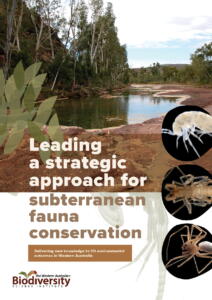 01
Leading a strategic approach for subterranean fauna conservation
2022 Download PDF -
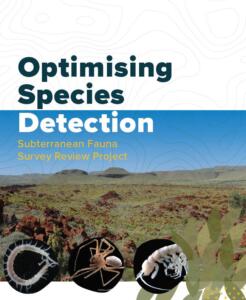 02
Survey Review Project Report, Subterranean Fauna Research Program
2021 Download PDF -
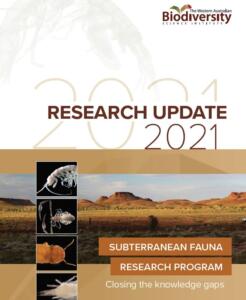 03
Research update 2021: Subterranean Fauna Research Program
2021 Download PDF -
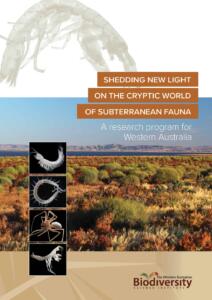 04
Subterranean Fauna: A research program for Western Australia
2018 Download PDF

More from this program.
-
Program
Subterranean fauna
Addressing critical knowledge gaps in Western Australia’s unique subterranean ecosystems to improve environmental assessment, conservation and sustainable development decisions.
-
Project
Assessing stygofaunal resilience
Understanding how stygofauna respond to environmental change is critical to assessing and managing impacts on groundwater ecosystems.
-
Project
Identifications of a variety of subterranean fauna
The Pilbara may hold around 1,800 species of underground animals, yet only 270 have been formally described.