Western Australia's unique biodiversity.
One of the most biologically diverse places on Earth.
Biological diversity
Biodiversity is short for biological diversity. It refers to the variety of lifeforms and their interactions. There is diversity within species, between species and of ecosystems, which refer to the different habitats, communities, and ecological processes across the planet.
Western Australia’s biodiversity is globally significant and locally unique.
Everything on Country is connected.
Country refers to lands, waterways and seas. For Aboriginal and Torres Strait Islander peoples, plants, animals, landscapes, waterways and weather are all part of a deep system of traditional knowledge, culture and relationships.
Traditional knowledge has been built over generations through shared understanding, skills and beliefs in caring for Country. It has helped sustain First Nations communities and continues to guide contemporary science to create better ways to protect nature and biodiversity.
Australia’s biodiversity hotspots and Western Australia
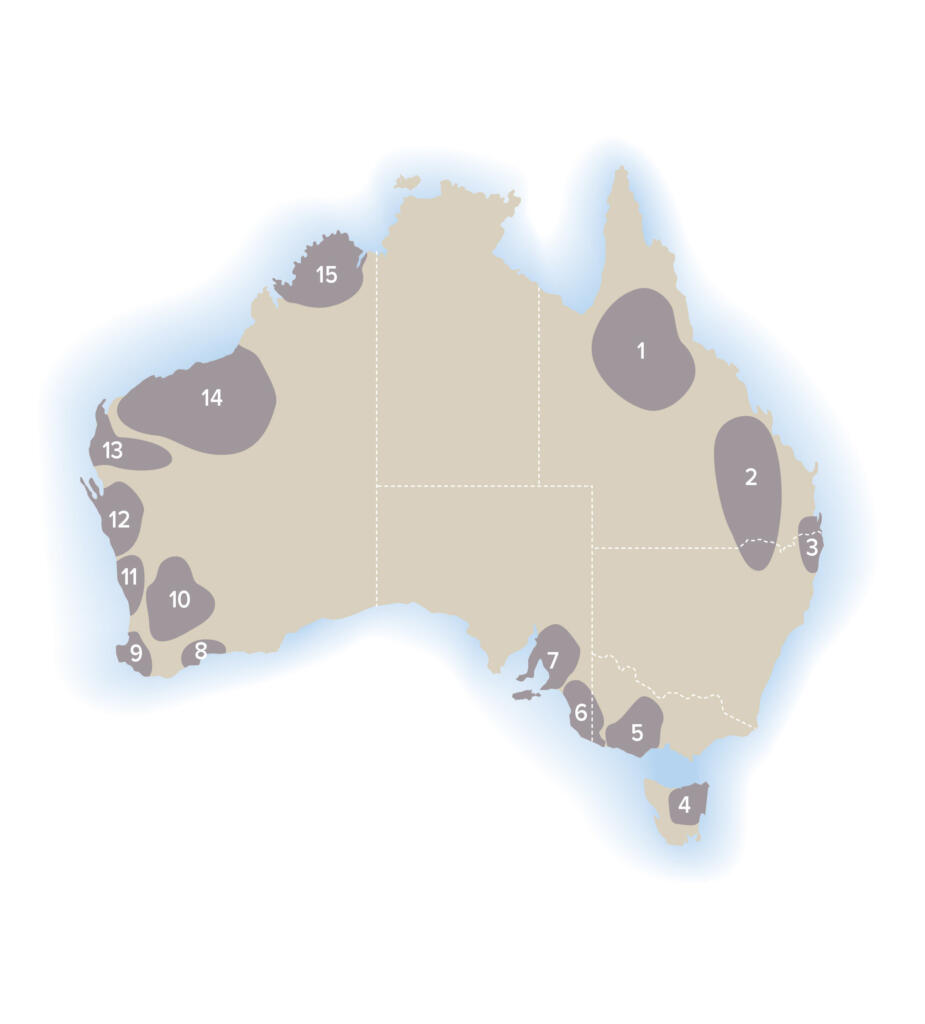
Australia supports 600,000 to 700,000 native species. A very high proportion of these are found nowhere else in the world. Eight of Australia’s 15 nationally recognised biodiversity hotspots are located in Western Australia. The South West region of Western Australia is recognised as one of only 36 global biodiversity hotspots, and the only one in Australia. Western Australia has one of the world’s highest rates of new species discovery.
Global biodiversity hotspots
Regions with at least 1,500 vascular plant species that have lost at least 70% of their original supporting habitat.
This map shows Australia’s National Biodiversity Hotspots.
- Einasleigh and Desert Uplands (QLD)
- Brigalow North and South (QLD and NSW)
- Border Ranges North and South (QLD and NSW)
- Midlands of Tasmania
- Victorian Volcanic Plain
- South Australia’s South-East/ Victoria’s South-West
- Mt Lofty/Kangaroo Island (SA)
- Fitzgerald River Ravensthorpe (WA)
- Busselton Augusta (WA)
- Central and Eastern Avon Wheatbelt (WA)
- Mount Lesueur-Eneabba (WA)
- Geraldton to Shark Bay sand plains (WA)
- Carnarvon Basin (WA)
- Hamersley-Pilbara (WA)
- North Kimberley (WA)
Five conditions have shaped Western Australia’s incredible diversity over millions of years.
A combination of these conditions has created perfect conditions for species to evolve in isolation.
Ancient landscapes
Old and stable landforms that have weathered in place without major disruptions like glaciation.
Nutrient-poor soils
Long-term leaching has left soils extremely deficient in nutrients, forcing plants to evolve and adapt in a remarkable way.
Varied climates
WA has dramatic climatic ranges from arid interior deserts, to the tropical north and the Mediterranean climate in the South West of WA.
Geographic isolation
With an ocean to the west and a vast desert to the east, WA’s flora and fauna has long been isolated from the rest of the world, growing and evolving into unique species.
Altered fire regimes
Over time, fire has shaped the landscape, making local plants highly resilient. Today, many species completely rely on fire to crack open their seeds, trigger new growth, or regenerate.
High value biodiversity, escalating risk.
Pressures driving nature and biodiversity loss.
-
Land use change
Urbanisation, agricultural expansion and industrial development destroy, alter and pollute natural habitats.
-
Introduced species and disease
Invasive species and diseases change habitats and ecosystems, affecting the survival of native flora and fauna.
-
Environmental change
Altered fire regimes, changing rainfall and water cycles and a warming climate destroy habitats and alter food sources for native species.
The state and trend of Australia’s environment is poor and deteriorating.
Increasing pressures from climate change, habitat loss, invasive species, pollution and resource extraction are threatening Australia’s environment. Multiple pressures create cumulative impacts that amplify threats.
Australia periodically publishes a State of the Environment Report (SOE).