
Modelling distribution data to predict subterranean fauna habit in the Pilbara
A PhD project at the University of Western Australia is using data modelling to predict where hidden underground animals live in the Pilbara. By linking animal records with geology, soil, landscape and climate, it helps us better understand and protect subterranean biodiversity.
Starting in 2022, this PhD project is part of the ARC Training Centre in Data Analytics for Resources and Environments (DARE) at the University of Western Australia. It studies where subterranean fauna live in the Hamersley Province of Western Australia. The researcher used a machine learning method called Random Forest to build species distribution models for key groups of cave and groundwater animals. The models work at different levels of classification and in different parts of the Pilbara, using geology, soil, topography, climate and time-related data.
The project delivered three main findings. First, it compared habitat suitability for troglofauna (animals living in underground air-filled spaces) across two areas, showing how environmental drivers differ from place to place. Second, it modelled stygofauna (groundwater animals) at order level (Amphipoda) and family level (Paramelitidae) to test how classification detail affects prediction accuracy. Third, it built a model for the family Eriopisidae to compare its habitat preferences with those of Paramelitidae.
Outputs from the program.
-
 01
Leading a strategic approach for subterranean fauna conservation
2022 Download PDF -
 02
Survey Review Project Report, Subterranean Fauna Research Program
2021 Download PDF -
 03
Research update 2021: Subterranean Fauna Research Program
2021 Download PDF -
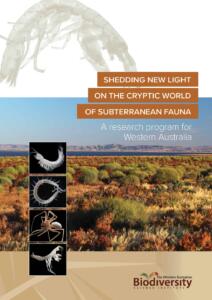 04
Subterranean Fauna: A research program for Western Australia
2018 Download PDF
More from this program.
-
Program
Subterranean fauna
Addressing critical knowledge gaps in Western Australia’s unique subterranean ecosystems to improve environmental assessment, conservation and sustainable development decisions.
-
Project
Assessing stygofaunal resilience
Understanding how stygofauna respond to environmental change is critical to assessing and managing impacts on groundwater ecosystems.
-
Project
Taking eDNA underground
Environmental DNA (eDNA) offers a new way to detect and monitor subterranean fauna without relying solely on traditional specimen-based approaches.