
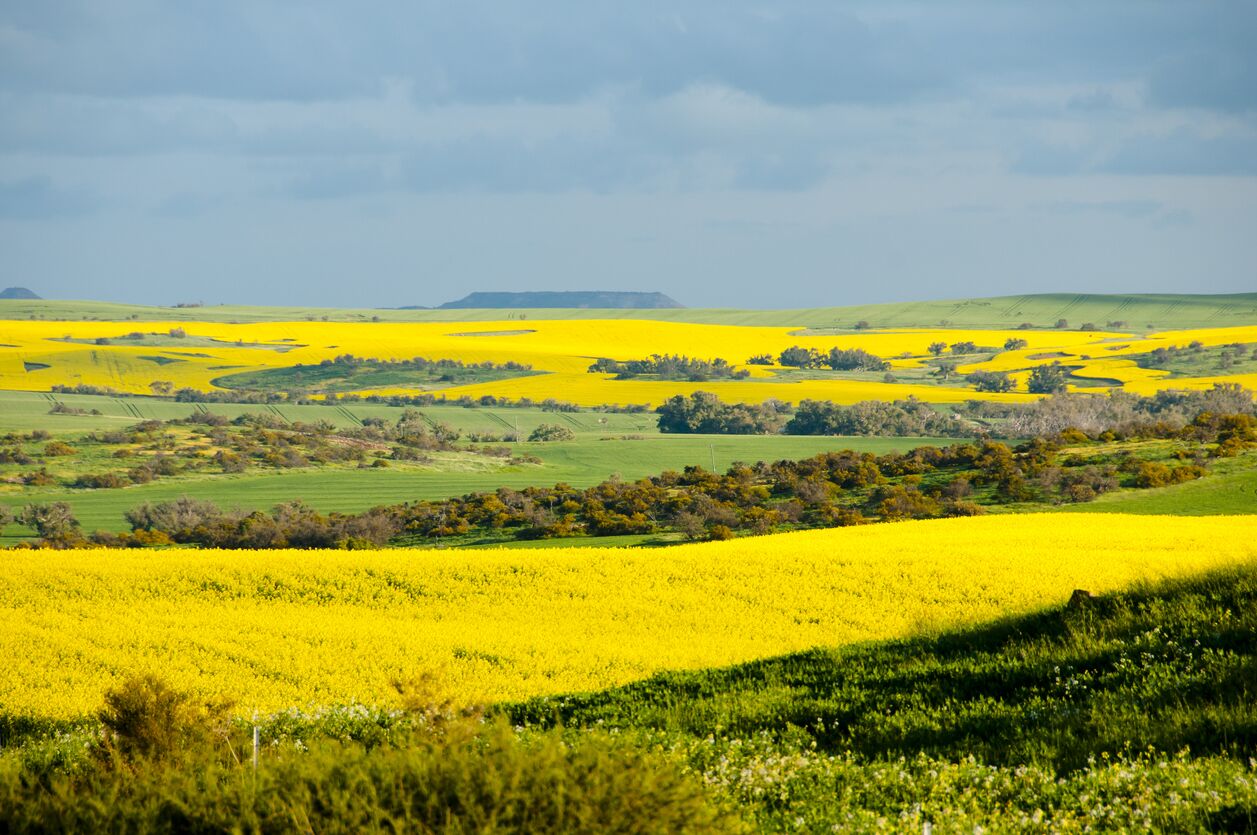
Wheatbelt Restoration Standards
Restoring degraded ecosystems is complex, particularly across a highly cleared and fragmented landscape such as the Western Australian Wheatbelt. The Wheatbelt Restoration Standards provide a practical, consistent framework to help restoration managers plan, deliver and evaluate restoration for resilient ecosystems and long-term social, environmental and economic outcomes.
Building consistency into restoration.
The Wheatbelt is a globally significant biodiversity hotspot facing multiple pressures, including extensive historical clearing, fragmentation and climate-induced drying. As restoration activity increases, a shared understanding of what effective restoration looks like is essential to achieving outcomes that can be replicated and scaled across the region.
WABSI developed the Restoration Standards in response to knowledge gaps and barriers identified with stakeholders from government, industry and research. The process incorporated literature reviews and engagement with Noongar kaartdijin knowledge holders, restoration and climate scientists, natural resource managers, agriculture, government and industry.
Practical tools for better restoration.
The Standards provide a framework, principles and practical tools to guide restoration managers through planning and implementation. Resources include approaches for selecting appropriate species and planting designs, developing completion criteria, assessing restoration barriers and enablers, setting targets, estimating costs and capturing consistent field and monitoring data.
The approach recognises that successful restoration is not simply about establishing vegetation. It needs to consider ecological function, resilience, social and economic values, regulatory requirements and the long-term management of restored landscapes. Consistent, repeatable and scalable approaches can help improve restoration quality, encourage innovation and collaboration, and strengthen investment in landscape-scale restoration.
Outputs from the program.
-
 01
Wheatbelt Restoration Standards – A practical guide for restoration managers
2025 Download PDF -
 02
Factsheet 1 – Values led ecosystem restoration (Wheatbelt Restoration Standards)
2025 Download PDF -
 03
WWTEC tool – An online workbook for restoration managers
2025 Download XLSX -
 04
Factsheet 2 – Market led ecosystem restoration (Wheatbelt Restoration Standards)
2025 Download PDF -
 05
Factsheet 3 – Regulatory compliance led ecosystem restoration (Wheatbelt Restoration Standards)
2025 Download PDF


More from this program.
-
Program
Restoration
Developing knowledge to scale ecological restoration, guide investment and build a restoration economy that delivers environmental, economic and social value.
-
Project
Biodiversity offsets in the Northern Jarrah Forest
The Northern Jarrah Forest is a landscape of environmental, cultural, social and economic significance facing increasing pressures from development and climate change.